ESOP, B Corp, and 3BL: Acronyms you should get to know.
If you think business should have a greater purpose than generating maximum profit and creating shareholder value, you might just be a Conscious Capitalist. Learn more about the movement that’s helping capitalism course correct.
Regaining Consciousness
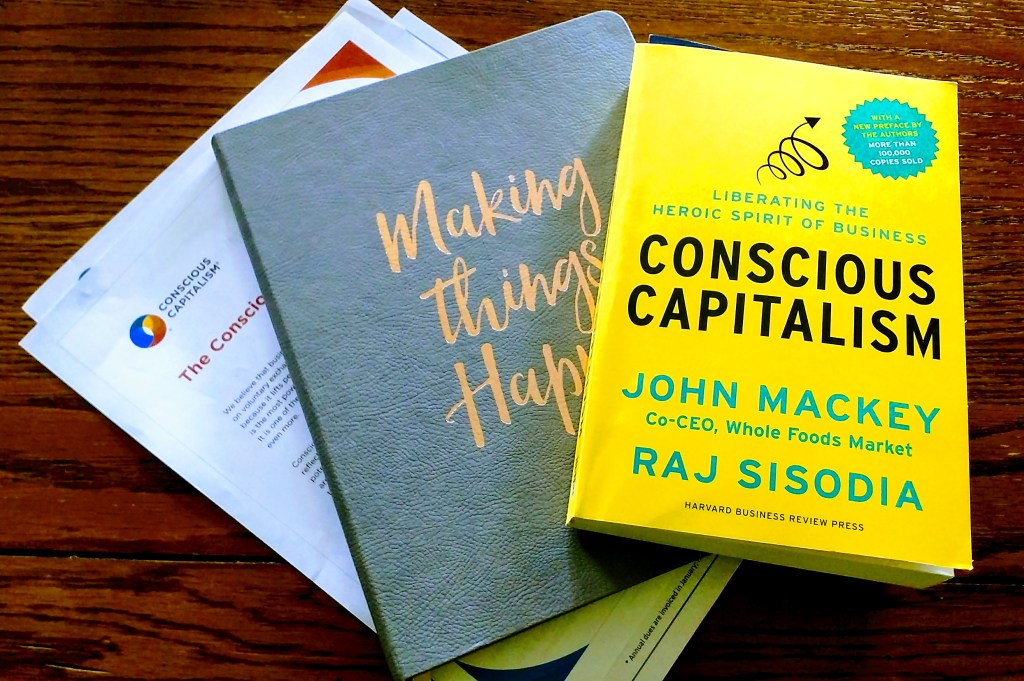
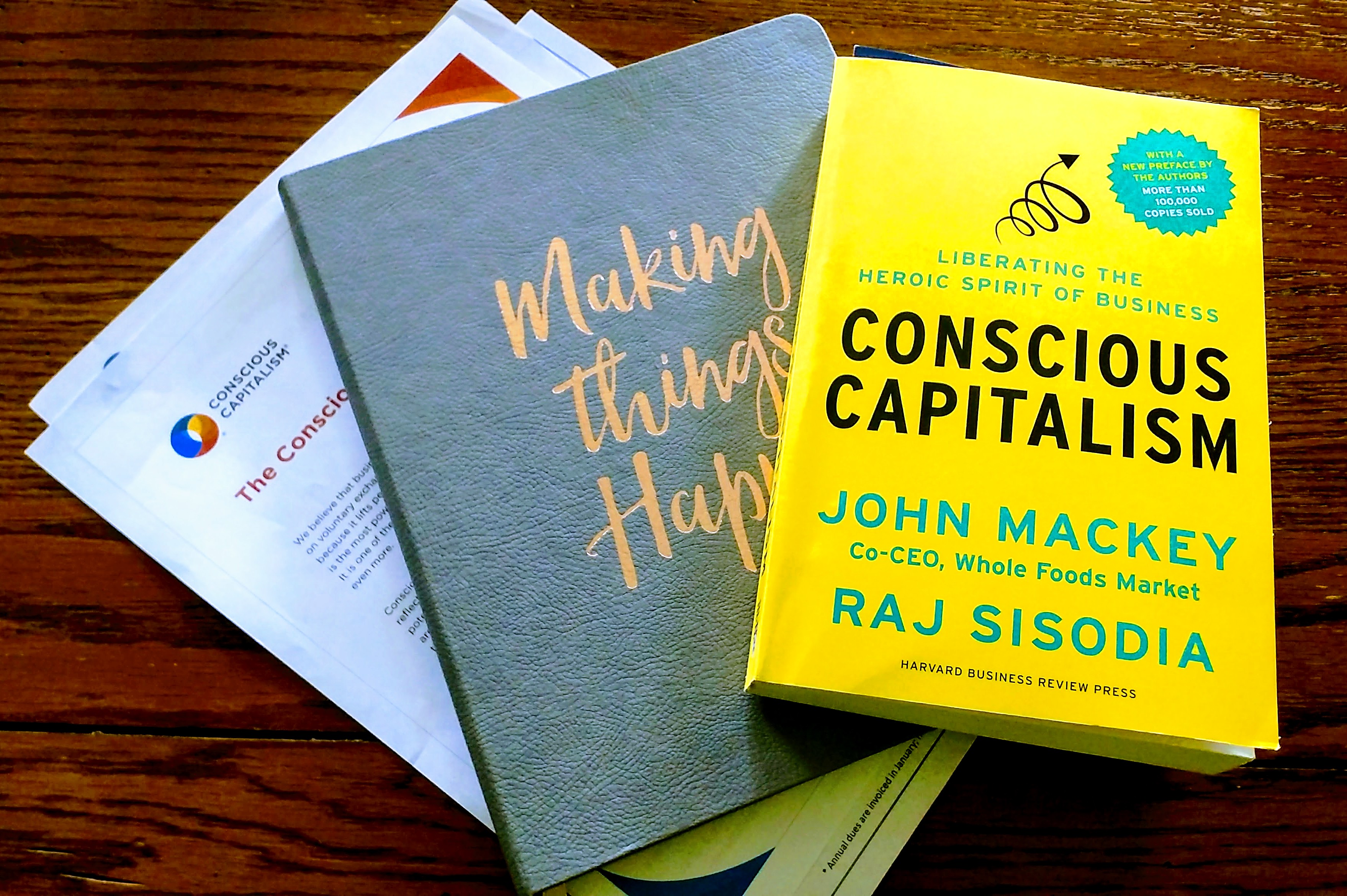
Conscious Capitalism is a business philosophy that recognizes and promotes the opportunity for capitalism to work for the greater good. Rather than focusing on financial profit alone, Conscious Capitalism holds that a higher purpose and shared values can unify an organization and increase motivation, performance, and ethical commitment, according to the book “Conscious Capitalism” by John Mackey and Raj Sisodia.
Companies conducting business in alignment with this philosophy reinforce the organization’s higher purpose through:
- Conscious culture and management
- Conscious leadership, and
- Stakeholder integration.
When all of these components are humming along, the Conscious Capitalist business works in harmony with the interests of society and continues to evolve and remain relevant.
Raising Consciousness in Rochester, NY
Five years ago, through a series of coincidences, Andrew Brady and his father Tom of Rochester, NY’s TheXLR8 Team found themselves at the third annual Conscious Capitalism conference in Boston. What they learned about the philosophy resonated with the way they were already doing business. Heck, one of their key customers, Wegmans, is mentioned throughout the Conscious Capitalism book! Brady and his father promptly determined that they had been practicing “Unconscious Conscious Capitalism” – walking the walk before they knew the Conscious Capitalism talk.
Inspired by what they learned at the Boston conference, Brady and his father soon founded a Rochester, NY chapter of the organization (CCROC). Since 2013, the Rochester chapter has been hosting speakers and touring local companies with a focus on sharing stories that support the mission of Conscious Capitalism.
Welcome to the Big Tent
CCROC recently organized Rochester’s first Conscious Business Sumit, hosting speakers from Butler/Till, Optimax, North American Breweries, Wegmans, and others. Keynote speaker, Doug Rauch of Daily Table and formerly Trader Joe’s rounded out the bill. Each speaker had their own take on the pillars of Conscious Capitalism, many through alternate, but compatible philosophies.
“Conscious Capitalism has the potential to be a big tent,” Brady says. It’s the ethos of companies that believe in doing business in a way that looks at something bigger than the bottom line, he says.
If any of the following ways of doing business sounds discussed during the Conscious Business Sumit sounds right to you, you might be a Conscious Capitalist:
- ESOP: An employee stock ownership plan turns employees into shareholders. Sue Butler of media and communications agency Butler/Till spoke about the process she and founding partner Tracy Till took when they decided it was time to plan their exit from running the business day to day. The pay offs? This would reward the employees who helped to grow the company, protect any jobs that might be lost in a sale and maintain the culture and values they had built. Butler was so pleased with the result that she’d like nothing more than to focus on creating more ESOPs, she told summit attendees.
- B Corp: B Corps are to business what Fair Trade is to coffee, said Melissa Palmer, CFO/COO with Butler/Till during her summit session. Certified by B Lab, a nonprofit organization, these companies must meet standards of accountability and transparency and operate in a manner that creates benefit for all stakeholders including employees, the community, and the Why become a B Corp? “It’s not about being in competition with others — the real value is being better than your former self,” Palmer said.
- Great Place to Work: The Great Place to Work survey and certification process promotes a high-trust culture. “High-trust cultures see higher levels of innovation, customer and patient satisfaction, employee engagement, organizational agility, and more,” according to the Great Place to Work website. ESL Federal Credit Union has been participating in the employee survey process and making changes based on the feedback since 2010. What have they learned? “You can’t have a great customer experience if you aren’t providing a great employee experience,” said Maureen Wolfe, Senior VP/Director, Human Resources & Community Relations with ESL Federal Credit Union.
- Triple Bottom Line: Rather than focusing entirely on profit, the triple bottom line or 3BL philosophy measures company success in three key areas: financial, social, and environmental. Organizations that follow this line of thinking aim to “grow profits, do right by people, and do right by the planet,” said speaker Kris Sirchio, CEO of North American Breweries. One key point: “You need to do all three at the same time,” Sirchio said. “If you don’t, you’re telling people that one isn’t important.”
What Next?
If all that sounds good, and you’re ready to investigate Conscious Capitalism or one of these other compatible philosophies, you can get started by picking up a book, visiting one of the websites below, or attending a local Conscious Capitalism meeting.
But don’t get ahead of yourself when it comes to redirecting your company’s culture, Brady warns. “Leaders have to grow for the business to grow,” he cautions. And that growth should involve more than hanging an “our employees are our greatest asset” poster on the wall. Taking baby steps and allowing time to develop leaders and grow a culture in line with your philosophy is essential.
Resources:
- ESOP: http://esopplus.com/
- B Corp: https://www.bcorporation.net/
- Great Place to Work: https://www.greatplacetowork.com/
- Conscious Capitalism Rochester Chapter: https://consciouscapitalismroc.org/
- Conscious Capitalism: https://www.consciouscapitalism.org/
- TheXLR8 Team: http://www.thexlr8team.com/
 jan milliman
Leave a comment